



- Published on: 2026-03-05 14:42:00
Trading During Emotional Distress: When External Stress Spills Into Your Decisions
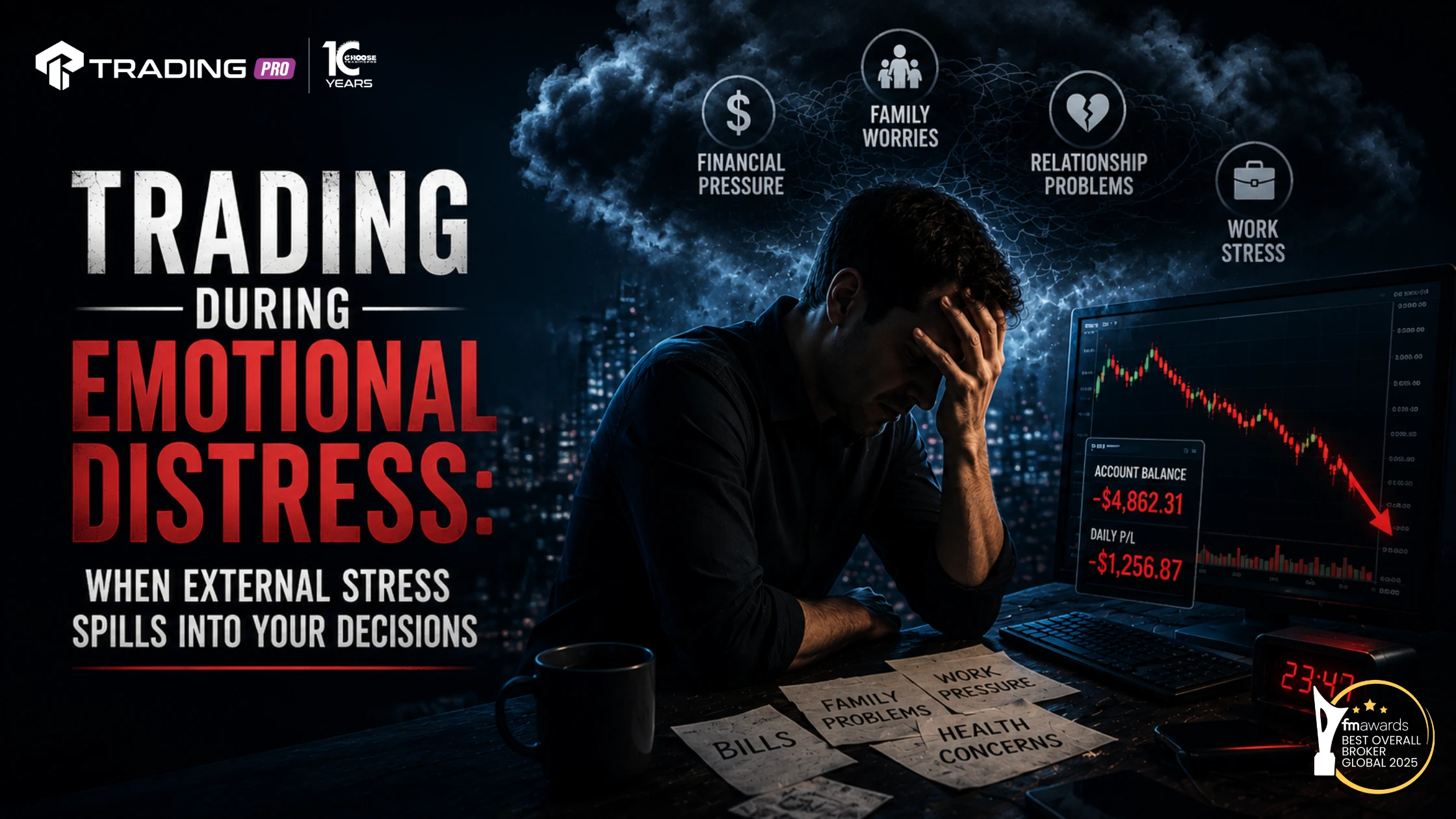
After years in the forex market, one lesson stands above almost everything else: the biggest threat to consistent profitability is not volatility, wide spreads, or even a poorly constructed strategy. It is trading during emotional distress. External stress has a direct, measurable impact on decision-making, risk management, and trading psychology — and when life pressure builds outside the charts, it will always find its way inside your trading account.
Forex trading demands precision, discipline, and emotional control in equal measure. But traders are human. Financial pressure, relationship difficulties, health concerns, poor sleep, and social stress can all silently distort judgment in ways that are difficult to detect at the moment. The result is predictable: impulsive entries, revenge trading, overleveraging, and the abandonment of strategies that work perfectly well under normal conditions.
The Hidden Cost of Emotional Trading
The forex market is already a high-performance environment. It requires rapid, simultaneous analysis of price action, market structure, technical indicators, and macroeconomic data. When emotional stress enters the equation, cognitive clarity drops — and the quality of every decision made after that point deteriorates with it.
Here is what typically happens when external stress bleeds into trading decisions:
- Increased impulsivity in trade entries, bypassing confirmation criteria
- Reduced patience for high-probability setups, leading to premature or forced entries
- Poor stop-loss placement driven by emotion rather than structure
- Overtrading as a mechanism to escape emotional discomfort
- Systematic abandonment of risk management rules under pressure
A stressed trader is not thinking about probabilities. They are reacting emotionally — and the market punishes emotional reactions with a consistency it rarely shows elsewhere.
In the early years, many traders make the mistake of trading through personal stress, convinced that discipline alone will override it. It does not. Win rates drop, risk-to-reward ratios deteriorate, and small losses compound into avoidable drawdowns with a speed that is difficult to explain until the emotional context is examined honestly.
Stress Alters Risk Perception
One of the most dangerous and least discussed effects of emotional distress in trading is distorted risk perception. Under stress, the brain shifts into a form of survival mode — and that survival response manifests in two equally destructive ways at the trading desk:
- Excessive risk-taking — overleveraging, doubling down on losing positions, sizing up in an attempt to recover losses quickly
- Extreme risk aversion — closing profitable trades too early, avoiding valid setups out of fear, hesitating at moments that require decisive action
Neither behaviour aligns with a professional trading plan. Effective risk management — proper position sizing, clearly defined stop-loss levels, and structured trade management — depends on a baseline of emotional neutrality. The moment stress levels rise, traders begin unconsciously deviating from the very system they built to protect them.
In the forex market, consistency matters far more than intensity. Emotional distress destroys consistency at its root.
Emotional Distress During Market Volatility
External stress becomes exponentially more dangerous during periods of elevated market volatility — major economic releases, central bank decisions, geopolitical escalations. If your personal emotional baseline is already unstable when these events occur, the volatile price movements that follow will amplify fear and greed beyond what rational analysis can manage.
Instead of calmly reading technical signals or assessing fundamental catalysts, the emotionally distressed trader reacts to every candlestick — chasing breakouts that have already moved, panic-closing profitable trades before targets are reached, holding losing positions well beyond planned exit points, and ignoring higher timeframe context entirely.
Professional forex traders understand that mental capital is just as important as financial capital. You can rebuild a depleted account with the right process. Rebuilding the psychological damage caused by trading in an emotionally compromised state takes considerably longer.
The Role of Trading Psychology
Trading psychology is not an optional supplement to a trading strategy. It is the foundation on which everything else sits. Emotional resilience is what determines whether a profitable edge actually translates into a profitable account over the long run.
When you are emotionally balanced, the difference in behaviour is stark. You follow your trading plan without deviation. You accept losses as an expected part of probability distribution. You manage drawdowns with patience rather than panic. You wait for high-quality setups rather than manufacturing reasons to enter.
When emotionally distressed, the opposite takes hold. You seek validation from the market rather than from your process. You force trades that do not meet your criteria. You override your own system. You trade to relieve emotional pressure rather than to execute a strategy.
The market does not reward emotional participation. It never has, and it never will. It rewards disciplined execution — consistently, over time, regardless of how you feel.
Practical Solutions: Protecting Your Trading Performance
The following practices, applied consistently, can protect both your performance and your psychological state during periods of elevated stress:
1. Self-Assessment Before Every Session
Before opening your trading platform, pause and ask yourself three questions: Did I sleep adequately? Am I emotionally stable today? Am I approaching the market from a place of clarity or from a place of pressure? If the honest answer signals instability, reduce your position size or step away from the charts entirely. Neither option is a failure — both are acts of professional judgment.
2. Reduce Exposure During Stressful Periods
When facing significant external pressure, scale back your risk per trade. If your standard risk is 1–2%, consider dropping to 0.5% until your emotional baseline stabilises. Capital preserved during unstable periods is capital available when conditions improve and your edge can be deployed with full clarity.
3. Trade Higher Timeframes Under Stress
Lower timeframes demand faster decision-making and inherently increase emotional reactivity — two things that compound the problem when stress is already elevated. During difficult periods, shifting to H4 or Daily charts reduces noise, slows the pace of decisions, and minimises the opportunity for impulsive behaviour.
4. Journal Your Emotional State Alongside Your Trades
A trading journal that only records entry and exit points is incomplete. Document your emotional condition before and during each session. Over time, patterns will emerge — and those patterns will almost certainly reveal that the worst losses cluster around periods of emotional instability rather than poor market conditions.
Forex Trading Is a Performance Profession
Professional trading is directly comparable to elite athletic performance. No serious athlete competes at their highest level when mentally distracted, emotionally overwhelmed, or physically compromised. The same principle applies — without exception — to forex traders.
Your mind is the primary trading tool. Technical indicators, price action setups, and fundamental analysis are secondary instruments. Capital preservation is not just about where you place your stop-loss. It is about protecting the psychological state that allows you to place it correctly in the first place.
Final Thoughts
Trading during emotional distress is one of the most underestimated and underaddressed risks in the forex market. No strategy — regardless of how refined, backtested, or statistically sound — can compensate for the cognitive and emotional impairment that external stress introduces into the decision-making process.
If you want consistent, sustainable results in forex trading, the commitment must extend beyond the charts. Prioritise mental clarity. Respect your psychological limits. Reduce exposure when your emotional state demands it. Treat trading as the high-performance discipline it is — one that requires you to show up at your best, not just your most determined.
The market will always be there tomorrow. Your job is to make sure you are mentally prepared to engage with it when you are.
In forex trading, protecting your mindset is not secondary to protecting your capital. They are the same thing.
Your mindset is your most valuable trading asset — protect it.
Join the TradingPRO community and get access to daily market analysis, trading psychology guides, and strategy breakdowns, its completely free.
Facebook | Instagram | Telegram | LinkedIn | Twitter (X)


